

Spoiler alert: The following contains spoilers for CIA Season 2, Episode 2.
The second episode of CIA Season 2, titled “Dead Drop,” tells a largely self-contained story that puts a guest character in the spotlight rather than focusing entirely on the CBS drama’s two leads. It is an effective approach for the episode’s central mission, even if the developments surrounding the show’s larger mysteries leave something to be desired.
The title may sound like a classic spy thriller setup, but the story is really about Colin Glass, an old rival, and one final request that turns into an unexpectedly emotional farewell. Meanwhile, the episode gives newcomer Teddy Marsh a chance to prove herself, while some of the ongoing storylines struggle to build on the momentum established in the season premiere.
Colin Glass Faces a Race Against Time
The mission begins when Viktor, one of Colin Glass’ rivals, interrupts his meal with a desperate request. Viktor knows he has been poisoned and believes he has less than 12 hours to find justice before he dies. In exchange for Colin’s help, he offers to assist the CIA in stopping a plot to identify and execute all American assets operating in Russia.
The setup follows familiar spy-thriller territory. Russian antagonists, a poisoned operative, and a race against the clock establish the stakes quickly. As expected, Colin and Viktor eventually put their differences aside to confront the real threat, while the episode builds toward the tragic conclusion that Viktor’s time is running out.
Their shared history also provides room for the kind of banter that helps make the mission entertaining. However, the episode raises a question about another character: how long can CIA continue to rely on Bill’s lack of spy knowledge for humor? His outsider perspective is an important part of the series’ premise, but his repeated confusion could eventually lose its appeal.
The mystery behind Viktor’s poisoning is also fairly predictable. The culprit turns out to be someone he knows well, following a familiar twist that many television dramas use to deliver a late revelation.
The procedural side of the story feels rushed near the end, with Nikki Reynard simply being informed that the Russians have been put on a plane. The episode clearly wants to make room for a more personal moment between Colin and Viktor, and that decision largely pays off.
Colin takes Viktor to see the cellist he fell in love with perform one final time. Viktor dies just moments into her performance, bringing the mission to a bittersweet close. The scene is undeniably sentimental, but it works because the episode has spent time allowing viewers to get to know Viktor. The antagonists, by comparison, receive far less attention, making Viktor’s fate the emotional center of the story.
Teddy Marsh Gets Her Chance to Shine
One of the strongest aspects of “Dead Drop” is the opportunity it gives viewers to learn more about Teddy Marsh, who joined the series in the Season 2 premiere.
Her first major moment comes when she and Gina are sent to collect a viola that turns out to be more than an ordinary musical instrument. Teddy essentially reveals the truth to a shopkeeper, coming close to exposing her professional connections in the process.
It is hardly the most impressive introduction, but Teddy fares much better as the episode progresses. When the Russians target a woman, Teddy volunteers to take her place, putting herself directly in danger.
The decision leads to a tense sequence in the back of a van, where Teddy fights for her life. She eventually strangles the driver, causing the vehicle to roll to a stop. It is an effective demonstration of her capabilities and gives the new character a meaningful role early in the season.
Rather than keeping Teddy on the sidelines while the audience waits to discover what she brings to the series, CIA allows her to make a real contribution almost immediately. That is a welcome choice, particularly in an episode whose central storyline revolves around a character whose time on the show is coming to an end.
‘Dead Drop’ Reopens a Mystery That Seemed Resolved
While the standalone mission is largely successful, the episode’s ongoing storylines are considerably less satisfying.
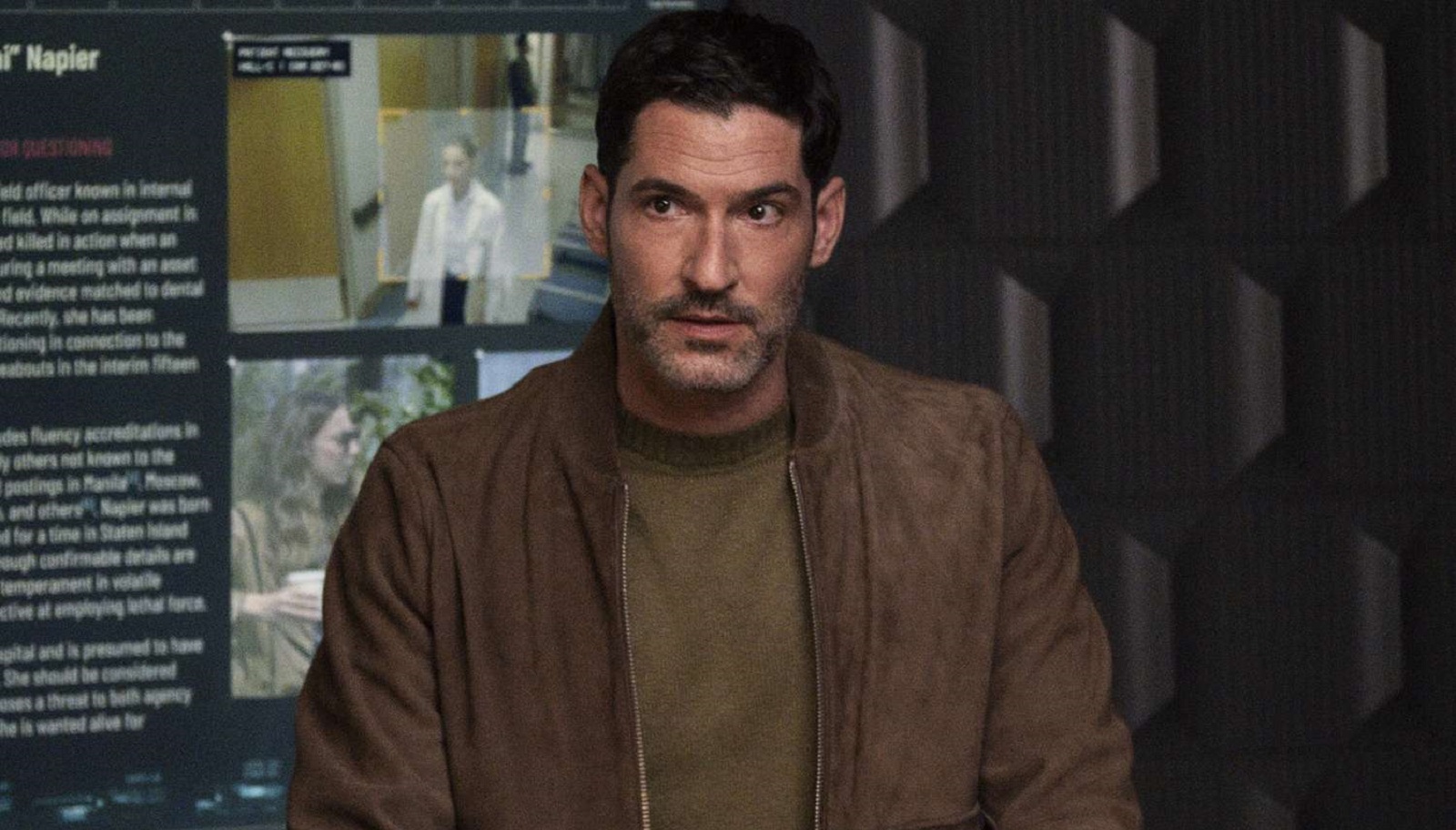
One of the strengths of the Season 2 premiere was the sense that Colin’s slate had finally been cleared. “Dead Drop,” however, appears to undo some of that progress by bringing Toni Napier back into the picture. She speaks with Nikki about “coming back,” raising questions about how much of Colin’s previous storyline has actually been put behind him.
The problem is not necessarily Toni’s return itself, but the uncertainty surrounding the direction of the larger narrative. With the mystery involving Bill’s father and the pursuit of Felix Vincente also demanding attention, it is unclear how long the writers intend to keep revisiting Colin’s past.
Vincente receives two references in the episode, seemingly confirming that his role will extend beyond a brief mention. Those details may become more meaningful later, but for now, they add to the list of unresolved threads rather than providing much forward momentum.
The episode also ends with a significant development for Bill: he confesses to Katie that he works for the CIA.
Bill’s Confession Deserves More Attention
Bill’s decision to tell Katie the truth is an important step for his character. It also creates an interesting contrast with Colin, whose love interest last season remained in the dark for a considerable period.
Unfortunately, the scene does not carry the dramatic weight it should. The episode ends before Katie does anything beyond staring at Bill, leaving the confession feeling flat and somewhat anticlimactic.
The moment invites comparison with the British spy drama Spooks, also known as MI-5 in the United States. In the first episode of that series, Tom Quinn and his boss, Harry Pearce, discuss the difficulty of concealing their work from loved ones. Harry reveals that he did not tell his wife he was a spy until the day they married.
CIA does not need to take the same approach with Bill and Katie, but the comparison highlights how much dramatic potential the series could draw from this kind of revelation. A confession like this should have consequences, emotional tension, and a reaction that gives the audience something to consider. Ending the episode before Katie meaningfully responds leaves the moment feeling underdeveloped.
It might have been more effective to save Bill’s confession for an episode in which he plays the central role. That would have given the revelation the space it needs instead of placing such an important character development on the sidelines of Colin and Viktor’s story.
Toni’s return creates a similar problem. Even though she appears in only one scene — or two, if Colin’s decision not to burn her photograph is included — her presence makes it feel as though the show is revisiting ground it had already covered. The storyline may become clearer as the season progresses, but this episode does little to justify bringing it back so soon.
Final Verdict: A Strong Standalone Story With Uneven Long-Term Plotting
Ultimately, “Dead Drop” belongs to Colin and Viktor, with Bill’s confession serving as a secondary storyline. The episode succeeds at building an emotional connection with Viktor and giving Teddy Marsh an opportunity to demonstrate what she can bring to CIA Season 2.
Viktor’s final moments are predictable, but they are still touching. Teddy’s action sequence is another highlight, offering a promising glimpse of the new character’s potential.
The larger mysteries are less convincing. Toni’s return weakens the sense of progress established by the premiere, while Bill’s confession to Katie lacks the payoff that such a major development deserves. The episode also rushes through parts of its central investigation to make room for its emotional conclusion.
“Dead Drop” is therefore a near-success: a well-executed standalone mission that works better as a story about two old rivals than as a chapter in the season’s broader narrative. For a series built around secrets, CIA still has some work to do to make its ongoing mysteries as compelling as its self-contained stories.